“Managing daily releases of 20+ micro services across different environments has never been a breeze. Thanks to team Flentas for helping us implement automatic release pipelines on cloud.”
Yogesh TripathiVP Technology63 Moons


63 moons technologies limited (formerly Financial Technologies India Ltd.) is a global technology company building digital markets and marketplaces focused on price discovery and transaction efficiencies across industries. When the company set out to build a new, fully cloud-native financial marketplace, it needed to support rapid development and frequent releases without an established DevOps practice in place. There was another constraint: the company's internal policy required its code to remain on-premise. Flentas designed the DevOps setup around that requirement, establishing an automated release pipeline with GitLab and Jenkins while using AWS for infrastructure provisioning, monitoring, and compliance. The platform also moved from a monolithic architecture to microservices, with traceability built into the release and monitoring process.
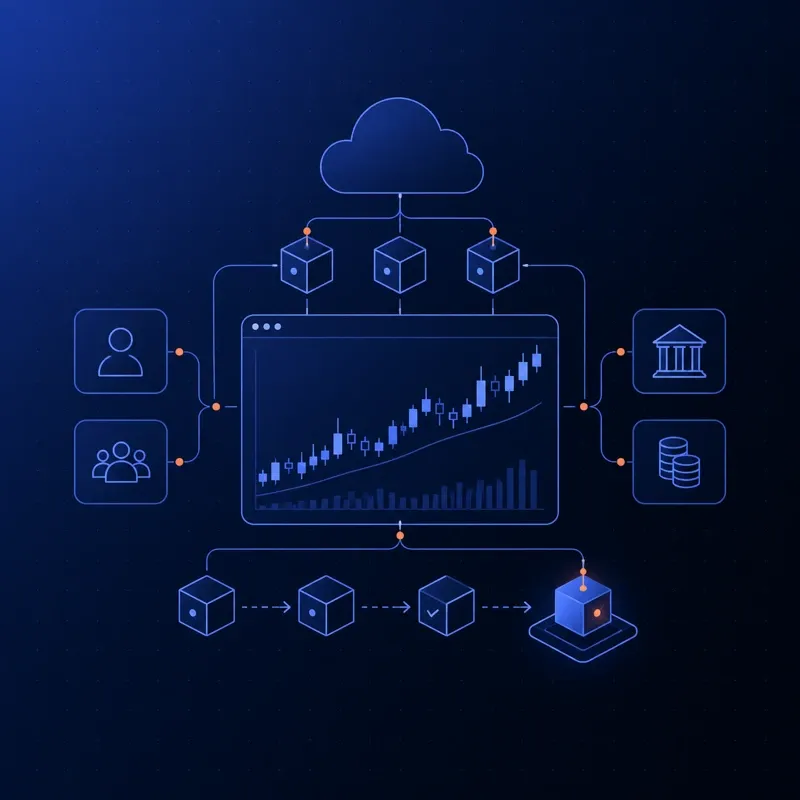
63 moons needed to build and release a services-based, highly available financial platform under tight timelines. But the processes required to support Agile development and reliable releases were not yet in place.
There was no central team collaboration and code management setup to support the Agile development process.
Moving releases from Development through QA and Production depended on manual processes.
With the move toward microservices, the team needed a structured way to monitor requests and troubleshoot issues across services.
Flentas designed the DevOps workflow around 63 moons' requirement that source code remain within its premises. The result separated code management and release orchestration from AWS infrastructure provisioning and monitoring.
Deployed GitLab on-premise as the central code repository and integrated it with Jenkins for dependency builds and release orchestration across Development, QA, and Production using Git Flow.
Routed new features through QA using pull and merge request reviews. SonarQube was integrated into the Jenkins build process so static code security analysis could run automatically during builds.
Used AWS CloudFormation to automatically provision dedicated tenant infrastructure, while AWS Config monitored account-level configuration and compliance rules.
Established CloudWatch dashboards and alarms for infrastructure visibility. API requests were logged through AWS CloudTrail with a unique trace ID, allowing individual requests to be tracked across the microservices they passed through.
The Dev-to-Production process was automated, reducing manual intervention and the potential for human error.
Developers, testers, and operations teams worked within a common release workflow rather than managing separate manual processes.
Automation increased release frequency, helping the team iterate on the financial marketplace faster.
Moving away from the monolithic design improved separation of concerns and maintainability.
SonarQube-based static analysis ran automatically during builds, while CloudWatch alarms provided timely visibility into infrastructure anomalies.
Unique trace IDs made it possible to follow API requests across microservices, giving the team a clearer path for debugging distributed transactions.
“Managing daily releases of 20+ micro services across different environments has never been a breeze. Thanks to team Flentas for helping us implement automatic release pipelines on cloud.”
Yogesh TripathiVP Technology63 Moons
Talk to an AWS-certified architect about your own release pipeline.