

How Phynart built a highly available IoT backbone for a growing connected-device fleet
Phynart's U.F.O device enables users to control home appliances remotely through a mobile app. As the device fleet grew, its monolithic cloud backbone struggled with scalability, connectivity, and latency for its primarily India-based users. Flentas redesigned the communications and API layer on AWS, creating a horizontally scalable and highly available foundation for real-time device control and fleet management.
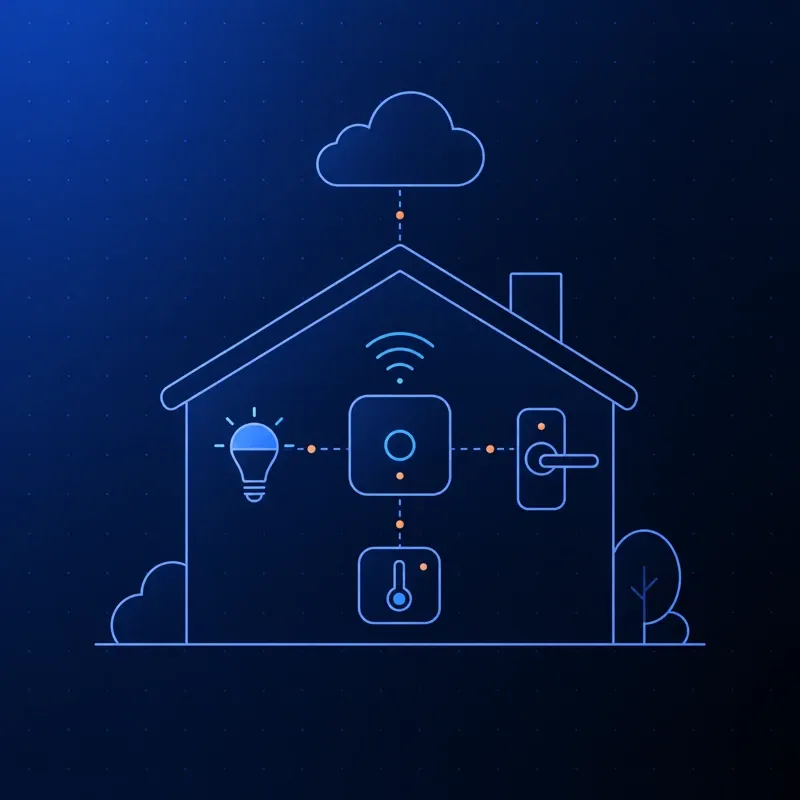
- Socket engine redesigned to scale with device growth
- Horizontally scalable
- Users and connected hubs supported concurrently
- Thousands
- Mobile-to-device communication and appliance control
- Real-time
A connected-device platform outgrowing its cloud backbone
As U.F.O adoption increased, the number of connected devices and real-time communications grew rapidly. The existing monolithic architecture couldn't scale with demand and was adding latency for users in India.
No horizontal scalability
The communications backbone couldn't scale out as device volume increased.
Unreliable connections
Intermittent socket connectivity affected communication between hubs and the cloud.
Limited visibility
Logging and event tracking lacked a streamlined architecture.
Regional latency
Infrastructure hosted in Ohio added latency for the predominantly India-based user base.
A scalable AWS backbone for real-time IoT communication
Flentas redesigned the cloud communication, device-control, and data-ingestion layers to support a growing IoT fleet.
Built a horizontally scalable WebSocket engine using ALB, EC2, and ElastiCache Redis Pub/Sub.
Routed communication between hub devices and mobile users through the scalable WebSocket layer.
Enabled real-time cloud-to-device actuation for remote appliance control.
Built a centralized data pipeline using Kinesis, S3, and RDS for device and event data.
Scalable, connected, and easier to manage
Scalable device communication
Supporting thousands of users and connected hubs concurrently.
Real-time appliance control
Enabling reliable communication between mobile apps and home devices.
Remote monitoring and troubleshooting
Reducing the need for on-site service visits.
Fleet-wide device management
Enabling software and patch releases across connected devices.
Stronger operational visibility
With centralized ingestion and storage of device fleet data.
What IoT product teams usually ask about scaling a connected-device platform
Ready to build an IoT backbone that scales with your device fleet?
Talk to an AWS-certified architect about your IoT platform.