

BFSI · Microfinance · Cloud Migration

How Svatantra Microfin cut AWS costs by 40% without a single day of branch downtime

Svatantra Microfin is an NBFC microfinance lender serving 2.1 million customers through more than 800 rural branches across India. As the branch network expanded, its co-located data center was becoming a constraint. Provisioning fixed infrastructure could not keep pace with new branches or growing loan-processing volumes, while backend performance and security also needed attention. Flentas migrated Svatantra's core banking applications to AWS in under a month, with no interruption to branch operations. The migration also brought monthly infrastructure costs down by 40% and established a foundation for high availability, monitoring, security, and disaster recovery.

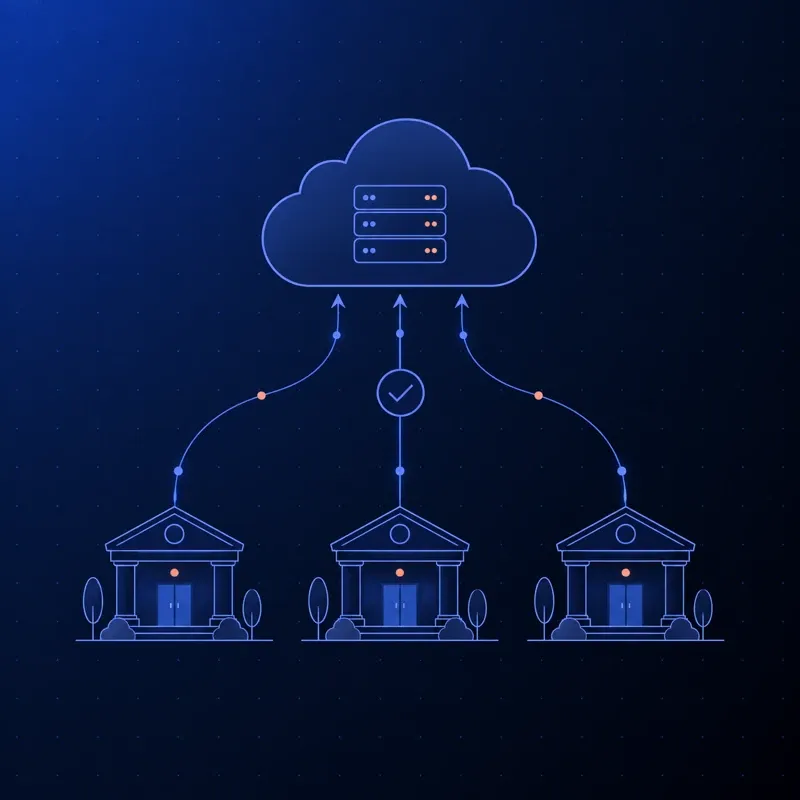
Microfinance branch cloud migration without downtime.
  • Svatantra Microfin
  • 2.1M customers served
  • 800+ rural branches
  • AWS-certified migration team
At a Glance
Infrastructure cost savings
40%
Full migration completed
~1 month
Data secured with DR readiness
~5TB
The Challenge

Co-location could not keep pace with branch growth

Svatantra was opening branches faster than its existing data center could provision infrastructure for them. With workloads projected to double within two years, the fixed-capacity model was becoming difficult to sustain.

No on-demand scale

Co-located infrastructure could not flex easily with branch expansion or seasonal spikes in loan activity.

Performance bottlenecks

Growing branch volumes were putting pressure on backend applications and infrastructure.

Security gaps

The existing environment had gaps in areas including perimeter protection and access controls that needed to be addressed as part of the migration.

The Approach

A governed migration to AWS

Flentas' AWS-certified engineers structured the migration in stages, addressing architecture, storage, security, monitoring, and cutover as part of the same program.

  1. Migrated Svatantra's business applications to AWS and implemented a highly available MSSQL Always-On database cluster.

  2. Built the AWS environment using Amazon EC2, load balancers, and Amazon VPC, with UAT and production environments separated to support better governance.

  3. Modernized storage with Amazon S3 and strengthened security and operations using AWS WAF, Systems Manager, and CloudTrail.

  4. Established CloudWatch and SNS monitoring and managed the final cutover with AWS-certified engineers to minimize disruption to branch operations.

Business Outcome

Lower cost, stronger security, ready to scale

  1. 40% infrastructure cost savings

    AWS Savings Plans, automation, and optimized resource utilization reduced monthly infrastructure spend.

  2. Stronger security posture

    Critical gaps, including S3 exposure and missing WAF protection, were addressed as part of the migration.

  3. 24/7 managed services

    Continuous monitoring and incident support improved operational visibility and helped maintain uptime.

  4. High availability and scalability

    The AWS architecture was designed to support peak business days and scale with demand.

  5. Disaster recovery readiness

    MSSQL clustering on AWS provided a foundation for recovery, with successful restore drills conducted across approximately 5TB of data.

  6. Minimal business disruption

    The complete migration was finished in nearly one month, while Svatantra's 800+ branches continued operating.

“Really liked the whole experience right from planning, designing, implementation and delivery. The timeliness and professionalism spoke a lot about their maturity and experience around delivering Cloud based projects.”

Sameer JoshiCloud ArchitectAditya Birla Group

Technologies & Partners

Built on the AWS stack

  • Amazon EC2
  • Amazon VPC
  • ALB & NLB
  • Amazon S3
  • AWS WAF
  • AWS Systems Manager
  • Amazon EventBridge
  • AWS CloudTrail
  • AWS Savings Plans
  • Amazon CloudWatch & SNS
  • MSSQL Always-On
  • AWS Well-Architected
Common Questions

Get Started

Ready to see what a migration like this looks like for you?

Talk to an AWS-certified architect about your own migration timeline.